
Newsletter No.14 - July 2026
Welcome to the July 2026 newsletter for the Scottish Biometrics Commissioner
Since our last newsletter I have laid our Joint Assurance review on Fingerprints and our retrospective look back at our 2021/25 Strategic Plan.

Dr Brian Plastow
Scottish Biometrics Commissioner



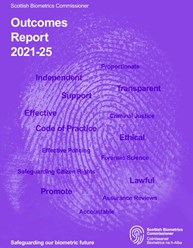
Our Outcomes Report was published on the 24 June. The report is a backwards look at our 2021/25 Strategic Plan. The highlights include the publication of our Code of Practice in November 2022 and details all our Assurance Reviews. Any recommendations from Assurance Reviews which have been discharged are also noted in the report. There is a section outlining the outreach we have undertaken despite being a small team. Click on the image to the image above to see the report.
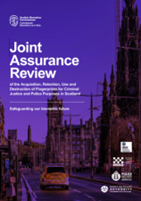
Our seventh Assurance Review on Fingerprints was published in March. The review was produced in conjunction with SPA Forensic Services, HMICS, Police Scotland and SPA. Page 9 displays the ten recommendations from this Assurance Review. As part of the extensive media coverage the Commissioner was interviewed by STV to discuss the report, and during their attendance at the Public Audit Committee, the Chief Constable confirmed Police Scotland accepted all the recommendations. The report can be read by clicking the image above.
Live Facial Recognition
As part of a survey carried out by the SPA the public were asked for their views on the
collection and retention of biometric information. The public were asked ten questions ranging from their understanding of why biometrics are taken to whether they agree / disagree with the police using technology that can identify people’s faces in public spaces. The full responses to the survey can be found here.
On 11 March the Commissioner appeared before the Criminal Justice Committee where he answered questions on the Fingerprint Assurance Review and discussed the Scottish Government review into the powers and functions of the SBC. Due to limited time committee requested the submission of follow-up information from the Commissioner, available here. The letter outlines the case for primary legislation for LFR.
Following the King’s Speech, the Commissioner wrote to the new Cabinet Secretary for Justice to ask if the Scottish Government will take the same approach as E&W. The King’s Speech confirmed that the UK Government intend bringing forward primary legislation to support expansion of the police use of Live Facial Recognition. Both the letter and response from the Cabinet Secretary can be found here.

This month’s blog is from our Subject Matter Expert – Karen McBride
I have been seconded to the Scottish Biometrics Commissioner since September 2025 and over the past few months I’ve been immersed in what their office do and how they do it – from educating myself on the five thematic assurance reviews that have been undertaken to date since 2022, to understanding the principles of the Code of Practice and seeing how the Strategic Plan shapes the focus of the next four years. Fortunately, my new team are very supportive and extremely knowledgeable – the months have flown by and I’m yet to pose a question they can’t answer! Hopefully I can reciprocate by sharing my knowledge of forensics, most extensively in fingerprints, and offer ideas, advice and guidance to the team.
Working with the Scottish Biometrics Commissioner is very different from my ‘normal’ day to day working life as a Senior Fingerprint Examiner, a role I’ve had for the last 32 years.
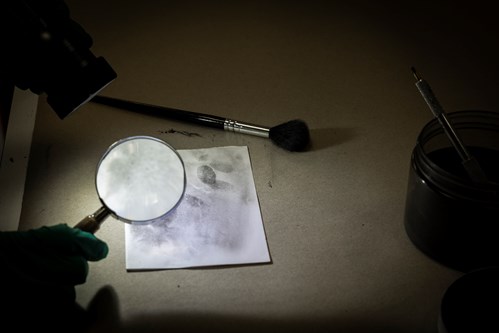
A typical day in the life of a Fingerprint Examiner involves processing fingerprint casework, and communicating results back to Police Scotland, the Crown Office and Procurator Fiscal Service (COPFS) and other outside agencies. Based on its uniqueness and persistence, friction ridge skin can be used as a means of identification and whether to assist in the investigation of crime or to confirm identity, finger and palm prints are commonly utilised for this purpose. Photographs and lifts of friction ridge detail (known as impressions or marks) are recovered from crime scenes and submitted to the SPA Forensic Services Fingerprint Department for examination where the fingerprint ACE-V methodology is applied - Analysis, Comparison, Evaluation and Verification. Using a fingerprint eyeglass, I start by analysing the friction ridge detail on each mark and assess its suitability for comparison, considering the quality and quantity of any ridge detail that is visible. Each mark with sufficient detail can then be manually compared against the known fingerprints of named individuals associated with the case, this time using two fingerprint eyeglasses. Using my fingerprint knowledge and the skills gained through extensive fingerprint comparison training and experience, I make an evaluation and come to an independent conclusion as to whether or not, in my opinion, the crime scene mark is identified. Subsequently all case work is subjected to independent verification (the ‘V’ part of the ACE-V process).
Unidentified marks may be searched through the UK national fingerprint collection database, IDENT1. The computerised system is an amazing search engine that can search one crime scene mark against millions of individuals’ fingerprints, but it still needs human beings to interpret the results and make a decision. I systematically check the suggested candidates offered by IDENT1 and determine whether a ‘new’ person is linked to the case by fingerprints.
I regularly liaise with other forensic disciplines and customers, discussing case strategies, providing casework results, producing reports for court and, from time to time, presenting fingerprint evidence in court. I’ve also been involved in training and mentoring, project management and the development of fingerprint policies and procedures.
Joining the Scottish Biometrics Commissioner’s Office has been a completely new experience. My communication skills and knowledge of forensics have stood me in good stead, and whilst I still have so much more to learn, I have adapted my day to a new way of working.
Most recently I have actively participated in developing and writing the thematic assurance review of Fingerprints. The report, which will be laid before Parliament in Spring 2026, is the result of months of evidence gathering, visits and fact finding, looking at how fingerprints are obtained, used, retained and destroyed in the Criminal Justice System and for policing purposes in Scotland. It has been rewarding to contribute to this and strengthen the collaboration between the Scottish Biometrics Commissioner, Police Scotland and the Scottish Police Authority.
The next step for me is to work with the team on future projects and reviews, and I am looking forward to participating in promoting public awareness and understanding of the role of the Scottish Biometrics Commissioner. With the continual advancement of new technologies and AI, we live with a rapidly changing biometric landscape that must be kept under close scrutiny, and the Scottish Biometrics Commissioner’s team will ensure that this is the case.
Consultations
SBC are currently consulting on our Code of Practice. The proposed amendments are available on our website along with details on how to contact us to provide any feedback. Once received and considered, the final revised version will be issued to the Scottish Ministers for approval and then uploaded to our website. The consultation closes Friday 4 September 2026.
The Scottish Government also held a review of the powers and functions of the SBC. The consultation closed in May, and the finalised report will be published in November. Please keep an eye on our website where we will publish the report. The Commissioner’s response asked the review to consider the extension of our functions to include the wider criminal justice system i.e. prisons and public safety cameras.
The Commissioner responded to the Home Office Consultation on a new legal framework for England and Wales on law enforcement use of biometrics, facial recognition and similar technologies. Biometrics Update picked up on the submission and published the following article titled “Scottish Biometrics Commissioner lays out blueprint for regulating police use of biometrics”. In addition, the Director was invited to a workshop run by the Office of the Biometrics and Surveillance Camera Commissioner for England & Wales to discuss alongside other key professionals what this new legal framework could look like
Between January and March, Police Scotland and the SPA consulted on their 2025-2030 Biometric Strategy. The consultation closed on 1 March and they received 1040 responses from members of the public and organisations. The intended strategy will play a vital role in delivering Police Scotland’s 2030 Vision for policing in Scotland and the SPA Forensic Strategy 2025-2030.

On the 21 May the Commissioner spoke at the Futurescot Scottish public sector AI conference. The Commissioner spoke about ethics, trust and confidence in the police use of AI highlighting that certain AI-enabled biometrics have been used effectively in UK policing without controversy since 2008.
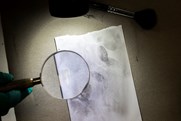
On 26 May the team attended the Police Treatment Centre in Auchterarder for our annual Strategic Away Day. In addition to working through key priorities for the forthcoming year, we had a session on identifying Fingerprints led by our Subject Matter Expert. This gave us a first-hand and very tangible experience of the life of a senior fingerprint examiner and the intricate process involved in identifying fingerprints.
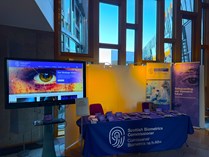
On 15 January the Commissioner and Business Support Officer attended the Scottish Parliament. During their time there they engaged with MSP’s about the work of the SBC. They also discussed the potential extension of the SBC functions to include additional Criminal Justice bodies and public space cameras. This was a positive event to raise awareness of our work and one the SBC hopes to repeat again in the future.
We hope that this short newsletter is of interest. You can subscribe to future newsletters and annual reports automatically by registering on our website.